Tag Archives: CSIR

AUDA-NEPAD Water CoEs contribute to the European Commission ArcX (Africa Regional Centres of Excellence) regional consultative meetings in 2026

Most AUDA-NEPAD Water CoEs were prepresed at the recent ArcX engagements in West and Southern Africa. The first meeting took place in Lomé, Togo from 22-24 June 2026, while the Southern Africa engagement was convened in Johannesburg, South Africa from 7-9 July 2026.

The Africa Regional Centres of Excellence (ArcX) programme (2023 -2030) aims at strengthening collaboration between African and European institutions, fostering inclusive green growth and innovation and capacity, as well as supporting Africa’s transformative agenda. The ArcX programme is financed by the EU through the Directorate-General for International Partnerships (DG INTPA) through the Neighbourhood, Development and International Cooperation Instrument – Global Europe (NDICI-GE) in line with the EU’s Global Gateway strategy . It is part of the broader AU–EU Science, Technology, and Innovation (STI) Partnership.

ArcX helps position Africa as a key player in the global green transition. It currently supports 51 African Centres of Excellence in 22 African countries, together with 11 partner organisations in Europe. Regional Centres of Excellence (RCoEs) supports these centres by acting as hubs of innovation. They work in five thematic areas (Agroecology, Biodiversity & Forests, Water, Ocean, and Climate Change resilience) and one cross-cutting component.

The Africa Regional Centres of Excellence (ArcX) programme, Technical Assistant team hosted the West Africa Regional Workshop in Lomé at the Hotel duex Frivrier, from 22 to 24 June 2026, under the theme “Interactions between Urban and Rural Environments and Ecosystem Sustainability in West Africa.” Convened within the framework of the ArcX programme and supported by the European Union, the three-day gathering brought together regional centres of excellence, policymakers, research institutions and private-sector actors to build a shared vision for managing the continent’s urban–rural interface and strengthening cross-sector cooperation.

The Southern African Network for Water, Centers of Excellence (SANWATCE) Secretariat was represented at the workshop, and the broader ACEWATER community was strongly present: all five of our partner institutions in the West Africa region took part, ensuring the network’s research and implementation experience was reflected throughout the proceedings. Their participation across the plenary and working sessions ensured that the perspectives of the region’s water and environmental research community were woven into every theme of the workshop.

The workshop opened with framing remarks from the ArcX Technical Assistance team, followed by an opening session featuring the EU Delegation to Togo and Togo’s Ministry of Environment, Forest Resources, Coastal Protection and Climate Change, led by Minister Komla Dodzi Kokoroko. In a welcoming that set a collaborative tone for the days to follow, the Ministry underscored the value of partnership encouraging closer cooperation among ArcX partners and between national and regional authorities as the foundation for tackling shared environmental challenges. The message resonated with the workshop’s central premise: that the region’s most pressing challenges cross both borders and sectors, and so too must the responses.

As a start the workshop commenced by building a common understanding of the ArcX ecosystem in West Africa, with an overview of stakeholders’ activities from partners including CIFOR-ICRAF, CORAF, CSE, ECMWF, FARA/RUFORUM, Mercator Ocean International and UCAD.

A highlight of the day was the keynote panel on the urban–rural interface, anchored by Dr Mathias Spaliviero of UN-Habitat, who framed urbanisation as a territorial development process requiring a multi-scaled, integrated approach; drawing on the case of the Sahel. His keynote was complemented by interventions on the bio-economy and natural capital, institutional fragmentation in natural-resource management, land and water management for sustainable food systems, and the multisectoral challenges of food security and population growth in West Africa. Together, the panel made a compelling case for treating urban and rural systems as interconnected rather than separate domains.

The second day turned to translating knowledge into co-designed, operational frameworks. Sessions on transformative private-sector and start-up solutions showcased innovative experiences from model farms in West Africa to approaches for turning research results into economic opportunities for young people highlighting the growing role of innovation and enterprise in the region’s development. A central thread of the day was scientific dissemination and data sharing. In parallel working groups, partners explored the Africa Knowledge Platform (AKP) as a mechanism for knowledge sharing and platform interoperability for multisectoral co-creation through ArcX, alongside multisectoral data integration and regional co-production mechanisms for decision support. These discussions spoke directly to the practical questions of how partners share data, integrate evidence across sectors, and build the digital infrastructure to support regional decision-making. The day concluded with a session on communicating across sectors and audiences, led by FARA and RUFORUM, focused on translating technical data into messages relevant to public policy. This emphasis on the science–policy–practice nexus and the science-communication skills needed to bridge it; underscored that even the strongest evidence must be tailored for decision-makers if it is to shape policy and practice.

The final day framed innovation as a driver of sustainable investment and partnerships. Parallel working groups examined options for promoting investment in services to address urban–rural challenges, and for harnessing the demographic dividend through youth, start-ups and business incubators reinforcing the workshop’s focus on stakeholder engagement and private-sector participation as essential to scaling solutions. The workshop closed with a plenary on identifying cross-sectoral activities to be taken forward within and beyond the ArcX framework, and on regional and continental integration setting a clear agenda for continued collaboration.
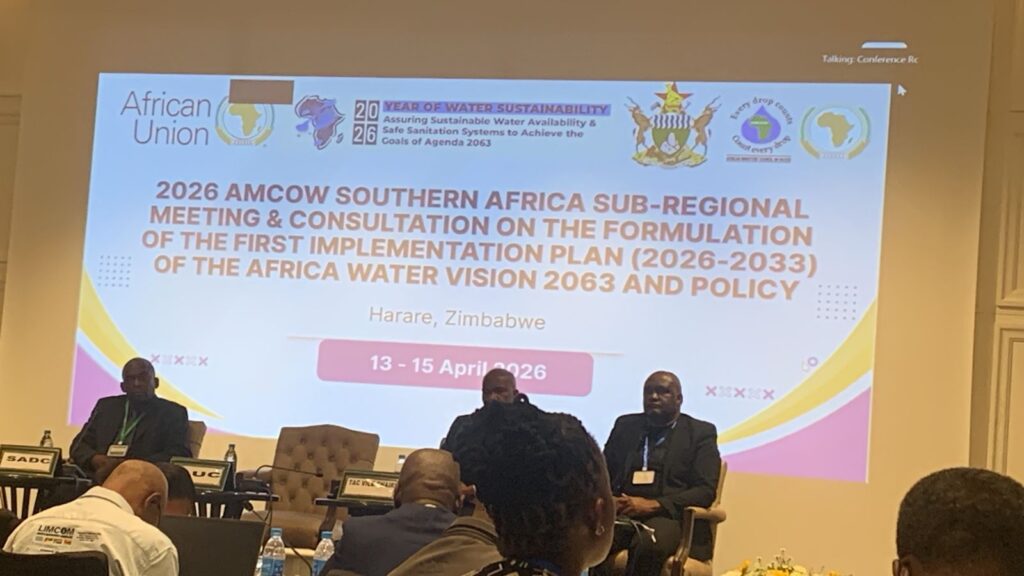
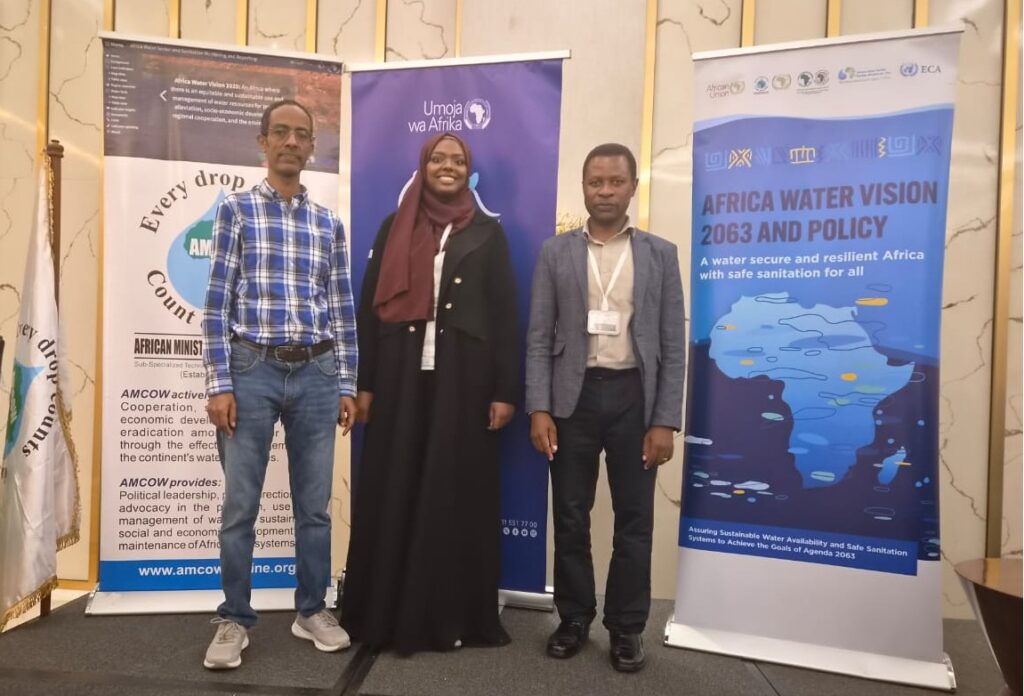
AUDA-NEPAD Water CoEs invited to the AMCOW regional consultations – First Implementation Plan 2026–2033 of the Africa Water Vision 2063 and Policy, April – May 2026

The African Ministers’ Council on Water (AMCOW) invited the AUDA-NEPAD Water CoEs to contribute at their regional consultations on the First Implementation Plan 2026–2033 of the Africa Water Vision 2063 and Policy. These meetings followed on the 2025 consultations working on the Africa Water Vision 2063 and Policy. The South Africa consultation was convened in Harare, Zimbabwe from 13-15 April, the East Africa meeting in Dar es Salaam, Tanzania, 13–15 May 2026, while the West Africa meeting was held in Abuja, Nigeria from 21 – 23 April.

African Leaders Endorse and Launch the Africa Water Vision 2063 & Policy at 39th AU Summit

By: AMCOW Secretariat. 17 February 2026

From Political Elevation to Continental Action under the 2026 AU Theme of the Year

Water and sanitation have moved decisively to the centre of Africa’s political agenda.
At the High-Level Side Event on “Assuring Sustainable Water Availability and Safe Sanitation Systems to Achieve the Goals of Agenda 2063”, held on the margins of the 39th Ordinary Session of the Assembly of the African Union, African leaders launched the Africa Water Vision 2063 and Policy on 15th February 2026– marking a decisive step from political recognition to coordinated continental delivery.

The launch of the Vision and Policy signals a strategic shift: water and sanitation are no longer treated merely as sectoral challenges, but recognised as fundamental for economic transformation, climate resilience, regional integration and long-term prosperity.

A Continental Framework for Transformation
The Africa Water Vision 2063 and Policy establishes a shared continental direction to:

  • secure sustainable water availability
  • ensure safe sanitation systems for all
  • mobilise climate-resilient investment
  • strengthen governance and accountability
  • advance transboundary cooperation

The launch of the Africa Water Vision 2063 and Policy followed its endorsement during the Ordinary Session of the Heads of State and Government. The Vision and Policy become the basis for elaborating:
(i) The continental implementation framework aimed at advancing the goals of Agenda 2063; and
(ii) The Africa’s Common Position and contribution to the UN 2026 Water Conference, accelerating global progress on SDG 6.

Anchored in eight strategic pillars – from universal access and sustainable water availability to resilient ecosystems, trusted data systems, human capital development and cooperative basin management – the Vision and Policy provide a coherent blueprint for delivery across sectors and borders.

Leaders Call for Investment, Implementation and Results

At the beginning of the launch of the Vision and Policy, H.E. Mahmoud Ali Youssouf, Chairperson of the African Union Commission, who was represented by H.E. Moses Vilakati, AU Commissioner for Agriculture, Rural Development, Blue Economy and Sustainable Environment (ARBE), described the moment as historic:
The decision by the Heads of State and Government to dedicate 2026 to water and sanitation marks a historic turning point to the African Continent.” He underscored that: “Investing in water and sanitation is not a cost. It is one of the highest return on investments Africa can make. If we secure water and sanitation, we secure Africa’s economic transformation”.

Presenting the Action Framework for the 2026 Theme of the Year, H.E. Moses Vilakati, AU Commissioner ARBE emphasised that the focus now is implementation:

This Theme is designed to accelerate implementation.” He warned that Africa is currently off track in achieving its water and sanitation commitments… The sector remains significantly under-financed.” Commissioner Vilakati stressed that success will ultimately be measured by deliveryand by how many African citizens gain access to safe water, safe sanitation, and resilient services.”

Speaking on behalf of AMCOW, H.E. Dr Cheikh Tidiane Dièye, Minister for Hydraulic and Sanitation of Senegal and President of AMCOW, framed the Vision as transformative: “This is not merely a sectoral vision and policy. It is a continental strategy for prosperity, peace and resilience. He added: Today, we are not simply launching a document – we are inaugurating a new era of continental determination.”

The official launch was led by H.E. Hakainde Hichilema, President of the Republic of Zambia, who was represented by Hon. Eng. Collins Nzovu, MP, Zambia’s Minister of Water Development and Sanitation. The President recalled the mandate entrusted to him by the Assembly: “Today, we fulfill that mandate.” He described the Vision as: “not just a policy, but a transformative blueprint.” He also described water as Africa’s most vital strategic resource: “It is the lifeblood that sustains our people, the energy that powers our industries, and the common thread that binds our nations together”. President Hichilema further underscored the urgency of water cooperation: “With 90% of our surface water crossing borders, cooperation is no longer an option, it is our only path to survival. The Africa Water Vision 2063 and Policy serve as our “Common Position” integrating water into the African Peace and Security Architecture to ensure that our shared basins remain engines of regional integration rather than sources of conflict”. In launching the vision, he also underscored the need to confront inaction and deal with the annual water investment gap in Africa estimated at US$ 30 billion and called on every leader, partner and citizen of Africa to embrace the Vision and Policy.

The European Union supports this continental ambition through Blue Africa Action, co-funded  with the Government of Germany and implemented in partnership with the African Union Commission and AMCOW. The initiative contributed to the development of the Africa Water Vision 2063 and Policy and continues to support its implementation.

From Lessons to Leadership
The Africa Water Vision 2063 & Policy builds on lessons from the Africa Water Vision 2025 and continental monitoring mechanisms, including AMCOW’s WASSMO reporting process. These assessments have highlighted both progress and persistent gaps – reinforcing the need for stronger accountability and accelerated implementation.

A Call to Collective Delivery
With its endorsement, the Africa Water Vision 2063 & Policy now sets a clear direction for Member States, Regional Economic Communities and partners to translate political commitment into measurable impact. Clearly, African leaders are convinced that securing water and sanitation means securing Africa’s future.

Download the Africa Water Vision 2063 and Policy in English and French here: AFRICA WATER VISION 2063 AND POLICY Assuring Sustainable Water Availability and Safe Sanitation Systems to Achieve the Goals of Agenda 2063


Download the WASSMO report here: 2024 AFRICA WATER AND SANITATION SECTOR MONITORING (WASSMO) REPORT – African Ministers’ Council on Water (AMCOW)

About AMCOW
The African Ministers’ Council on Water (AMCOW), established in 2002, provides political leadership, policy direction and advocacy for water and sanitation across Africa. As the sectoral committee on water and sanitation to the African Union’s Specialised Technical Committee on Agriculture, Rural Development, Blue Economy, Water and Environment (STC-ARBWE), AMCOW coordinates continental water policy and supports Member States in advancing sustainable water management.
Further information: www.amcow-online.org

Media contact:
Mr.  Molalet Tsedeke I Information and Communications Directorate I African Union Commission I Tel: 0911-630631 I Email: molalett@africanunion.org
Mr Emmanuel Uguru | Policy Officer, Monitoring Evaluation Reporting and Learning | E-mail: cuguru@amcow-online.org

AUDA-NEPAD SANWATCE partners engages at annual WaterNet/WARFSA/GWP-SA symposium in Lusaka, 28-31 October 2025

All 11 partners attended and actively engaged at this annual symposium. Several emerging scholars and researchers working on the ACEWATER III projects presented their respective research. The Unit for Environmental Ethics at Stellenbosch University, in collaboration with NUST Zimbabwe convened a special session on transboundary water ethics, which was attended by 20 participants. The AUDA-NEPAD SANWATCE secretariat convened a special session on the review of the SADC Water Research Agenda, which was attended by about 50 participants. Dr Patrice Kabeya, the Senior Programme Officer for Water at the SADC Secretariat welcomed the audience and set the scene for the session.

The SANWATCE Secretariat and Stellenbosch Univeristy Water Institute also co-convened two special sessions related to the WASANet project (Water Security in Africa).

AUDA-NEPAD SANWATCE used the opportunity to also convene its annual network consultative meeting.

Exploring TVET and Industry Collaboration in the Water Sector in Botswana

On 4 September 2025, a collaborative workshop between two European Union-funded projects took place at the University of Botswana in Gaborone. Team members from the projects, ACEWATER III (implemented through the AUDA-NEPAD Networks of Water Centres of Excellence and the Platform of Vocational Excellence Water, met with staff members of the University of Botswana as well as TVET Colleges in the region.

The objectives of the workshop were to:

Continue reading

Complementary access to the 24th WaterNet Special Issue article collection

The 24th WaterNet Physics and Chemistry of the Earth Special Issue article collection is now available on the journal webpage (https://www.sciencedirect.com/special-issue/10P416RCTD2).  The publisher, Elservier, has granted Network members a  one month complimentary access to this Special Issue with immediate effect.

Please  note that  we are still receiving submissions to the 25th WaterNet
Special Issue up to 30th June 2025.

Kind Regards,

Prof. Cosmo Ngongondo
Managing Executive Guest Editor

Emerging scholars undertake biophysical surveys in the Cape Town metropolitan area

Biophysical surveys are systematic investigations that assess the biological and physical components of an environment. These surveys are crucial for understanding the current state of an area, monitoring changes over time, and evaluating the potential impacts of human activities or natural processes. They further provide essential data for environmental management, conservation efforts, and sustainable development planning.

Continue reading

GORILLA conference attendance by AUDA-NEPAD Water Centres of Excellence funded by ACEWATER III project (African Centres of Excellence in Water)

Between 27 November 2024 – 6 December 2024, partners in the ACEWATER III project participated in three events, as part of the GORILLA (Geographical Science for Resilient Communities, Ecosystems and Livelihoods under Global Environmental Change) conference in Kampala, Uganda. The events were hosted by Makerere University.

Continue reading