University of Zambia publishes on: Application of the water accounting plus (WA+) framework for the assessment of water availability and consumption in the Zambezi River Basin (ZRB)

How much water do we really have available for development?

This is one of the most important questions facing water security, agricultural expansion, and climate adaptation in southern Africa. In our recent work on the Zambezi Basin, we developed a basin-scale water account to understand the fate of rainfall across the catchment.

What did we find:
Of the basin’s approximately 1,280 km³ (for scale – this is equivalent to the amount of water needed to meet global drinking water demand for 500 years) of annual rainfall:

1.) 94% is lost through net evaporation.

2.) Only 5–6% becomes river flow that eventually reaches the Indian Ocean.

3.) Of the evaporative losses, only about 36% is considered beneficial, supporting productive uses such as reservoirs, dams, and agriculture.
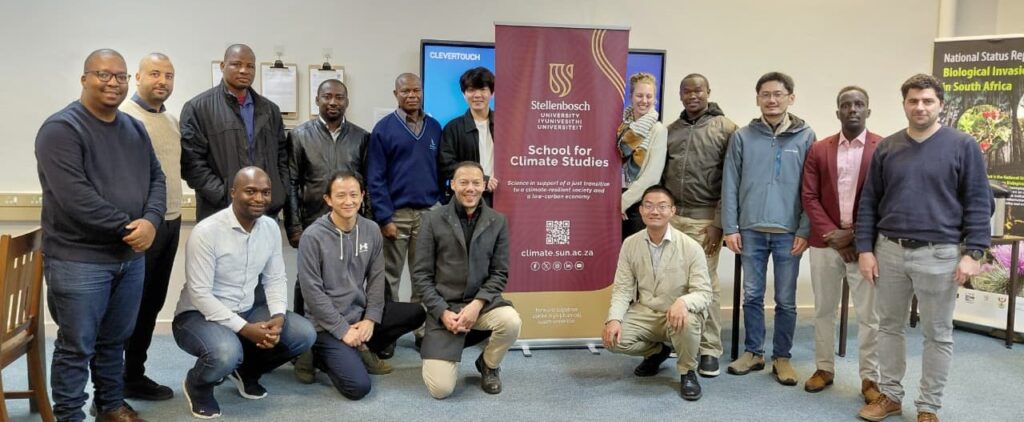
KNUST and University of Zambia colleagues attend AJ-INSPIRE training on the IsoGSM model (Isotope-enabled Global Spectral) at the School for Climate, Stellenbosch University, 11-15 May 2026

Through the ACEWATER III project and , three colleagues from the Kwame Nkrumah University of Science and Technology and one from the University of Zambia attended a highly technical short course training on isotope research, hosted by the Japan Initiative for Scientific Partnership in Innovative Research and Education (AJ-INSPIRE) and the Stellenbosch University School for Climate. The objectives of the training included:

1.) Sharing research progress and findings

2.) Training on the IsoGSM (Isotope-enabled Global Spectral Model), IsoRSM
(Isotope-enabled Regional Spectral Model) – global and regional applications

3.) Field visit to the Cape Point GNIP Site (Global Network for Isotopes in
Precipitation)

4.) Strengthening team collaboration and networking

5. Capacity building for early-career researchers

Partners in the AJ-INSPIRE programme include Egypt-Japan University of Science and Technology (E-JUST), University of Tokyo, Jomo Kenyatta University of Agriculture and Technology (JKUAT), and Stellenbosch University. Following the training, the ACEWATER III colleagues extended their stay in Stellenbosch for another week, to continue collaborations with the School for Climate.

Upcoming short course trainings at various AUDA-NEPAD Water Centres of Excellence in 2026

Through the ACEWATER III project, various water CoEs across Africa will host several short course trainings in second half of 2026. Please see the list and details below, and feel free to reach out if are interested in attending or require more information.

1.) University of Addis Ababa

24-28 August – Water resources assessment and allocation planning at basin and sub-basin levels (hybrid). https://docs.google.com/forms/d/e/1FAIpQLSfCC8QXUru021_jnvl7daQSbG-QYDL2wVCT6n8-lyRwfWcCZw/viewform?usp=publish-editor

2.) University of Zambia

2.1.) 18 – 22 July – Socioeconomics of water resource management (in collaboration with University of Kwazulu-Natal)

2.2.) 3 – 7 August – Transboundary water quality and governance (in collaboration University of the Western Cape, South Africa)

3.) University of Benin, Nigeria

17-21 August – Climate change issues, extreme events and impacts on key sectors (hybrid)

4.) NWRI (National Water Resources Institute), Nigeria

4.1.) 13-23 July – Hydrological Modelling and Field Measurements

4.2.) 19-23 October –  Climate Resilience: Access to Water Supply and Sanitation

5.) University of Makerere

Pre-GORILLA conference (Geographical Science for Resilient Communities, Ecosystems and Livelihoods Under Global Environmental Change), 30 November – 4 December 4, Kampala, Uganda.

6.) 2iE, Burkina Faso

15-18 September – Strengthening WASH resilience of displaced populations and communities in transboundary basins

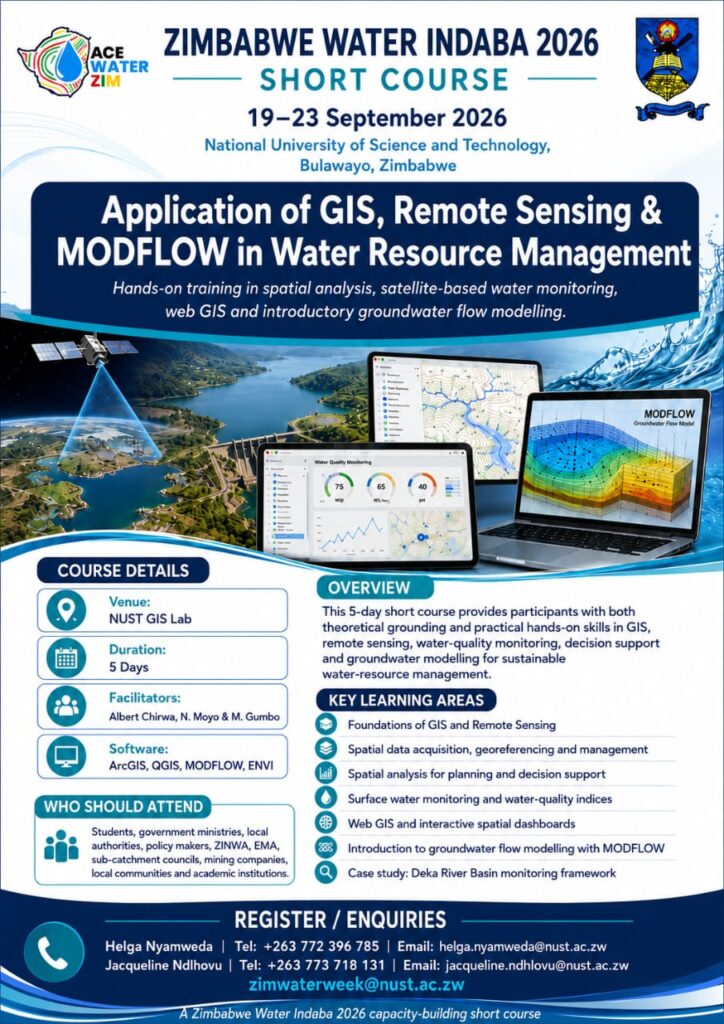
7.) NUST Zimbabwe

19-23 September – Application of GIS, Remote Sensing and MODFLOW in Water Resources Management

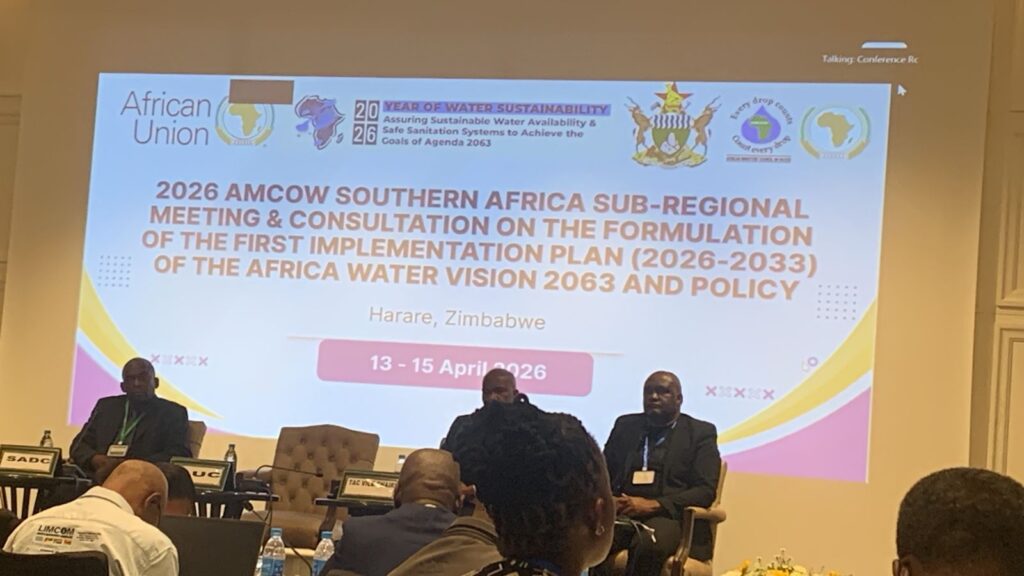
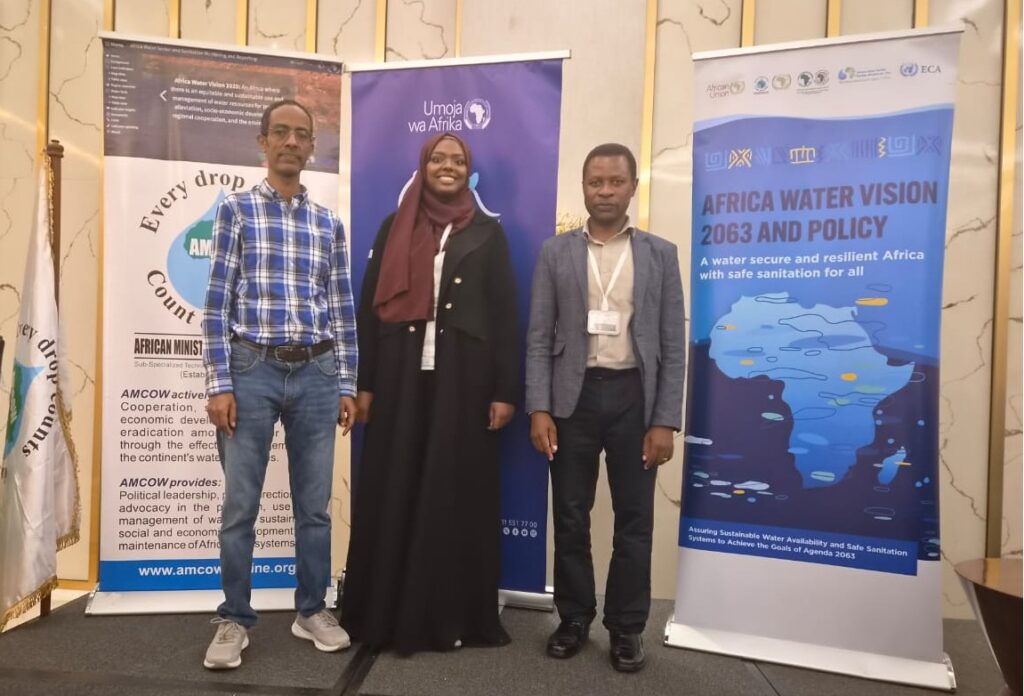
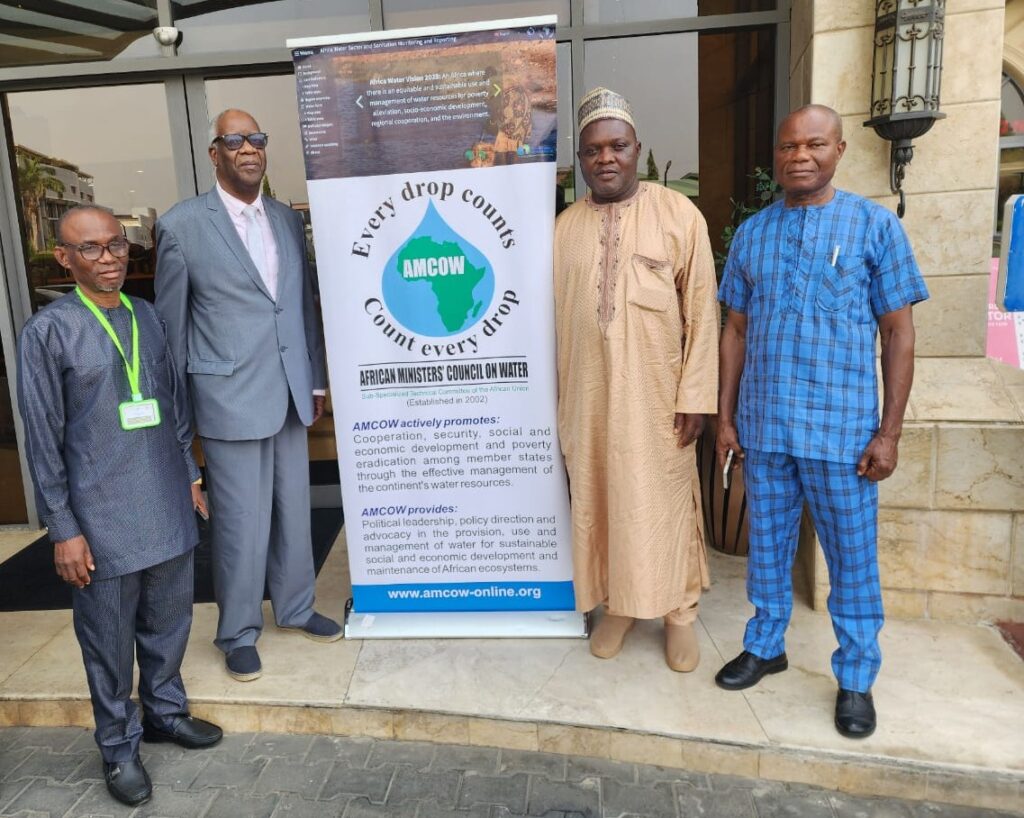
AUDA-NEPAD Water CoEs invited to the AMCOW regional consultations – First Implementation Plan 2026–2033 of the Africa Water Vision 2063 and Policy, April – May 2026

The African Ministers’ Council on Water (AMCOW) invited the AUDA-NEPAD Water CoEs to contribute at their regional consultations on the First Implementation Plan 2026–2033 of the Africa Water Vision 2063 and Policy. These meetings followed on the 2025 consultations working on the Africa Water Vision 2063 and Policy. The South Africa consultation was convened in Harare, Zimbabwe from 13-15 April, the East Africa meeting in Dar es Salaam, Tanzania, 13–15 May 2026, while the West Africa meeting was held in Abuja, Nigeria from 21 – 23 April.

NUST (Namibia University of Science and Technology) showcases the ACEWATER III project at Water Security Africa Enlit conference in Cape Town, South Africa, 19-21 May 2026

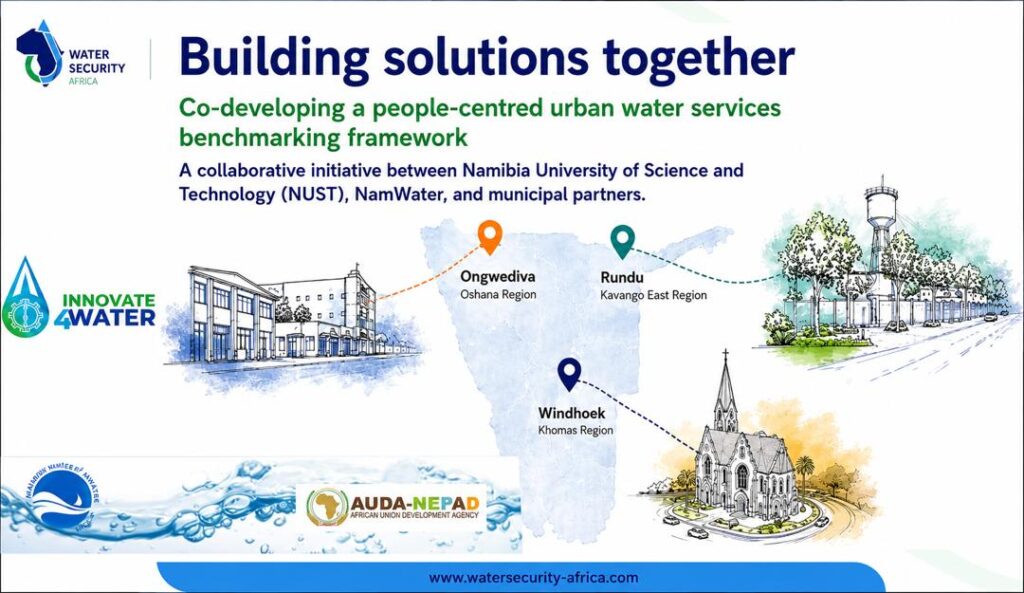
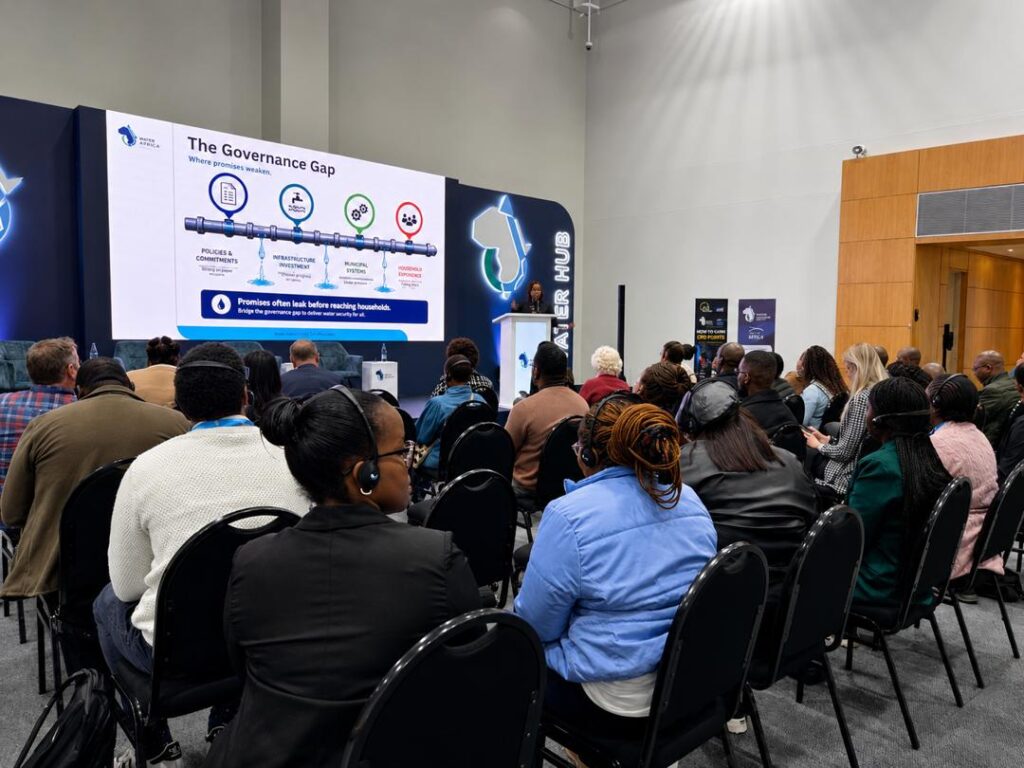
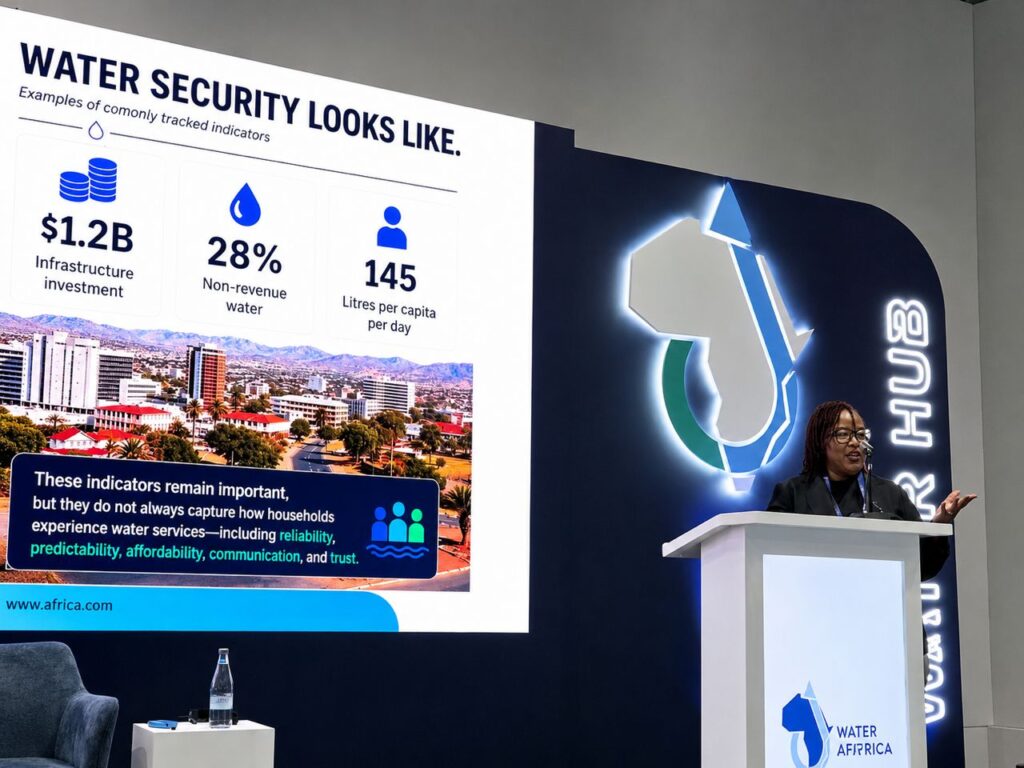
Dr Anna Matros-Goreses and Ms Rennie Munyayi attended the Water Security Africa Enlit conference at the Cape Town International Convention Centre (CTICC) from 19-21 May 2026. This is a dedicated industry conference and co-located event held alongside Enlit Africa, bringing together policymakers, utility leaders, and heavy industrial users to address the continent’s pressing water risks and resilience. During their dedicated conference session they promoted the AUDA-NEPAD Water Centres of Excellence and their ACEWATER III SWIM model (Smart WEFE Nexus Innovation Model).

Africa Day 2026 celebrations at the University of Johannesburg, South Africa, 25 May 2026

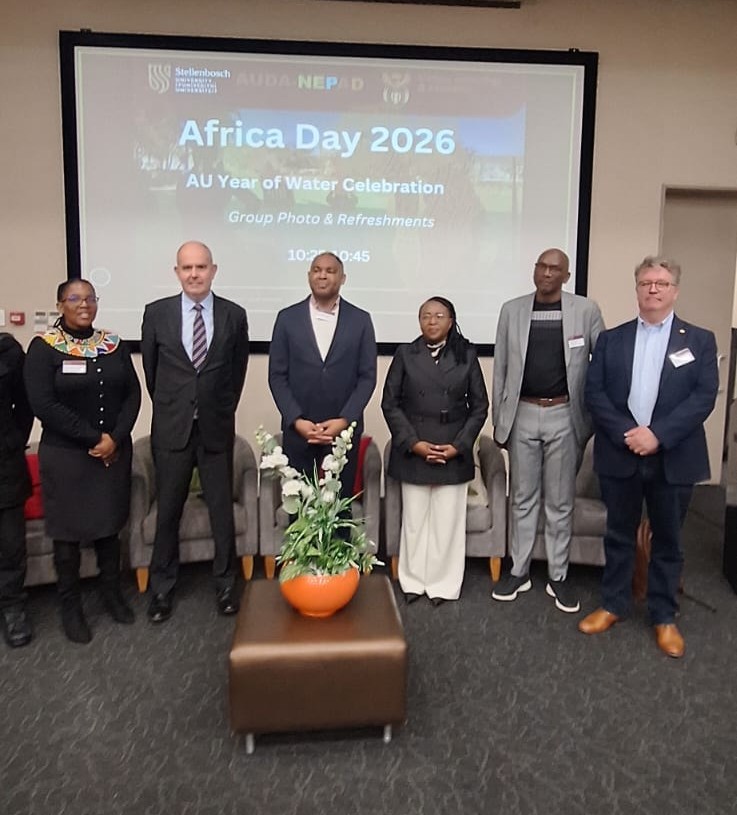
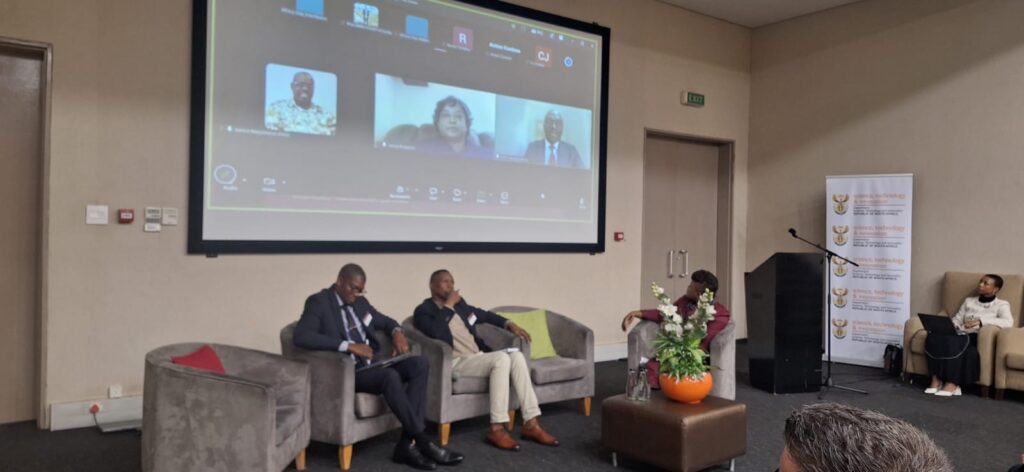
Africa Day 2026 was celebrated at the University of Johannesburg on 25 May 2026 under the African Union’s designation of the year as the AU Year of Water and Sanitation, with the theme on the impact of investments in the water sector and the deliberate subtitle of Letting Beneficiaries Tell the Story. The event was co-hosted by South Africa’s Department of Science, Technology and Innovation (DSTI), the AUDA-NEPAD Science, Technology and Innovation Hub, South Africa’s Department of Water and Sanitation (DWS), the Association of Water and Sanitation Institutions of South Africa (AWSISA), and AUDA-NEPAD SANWATCE. Given that the day also marked 20 years since the AMCOW and AMCOST ministerial decision that established the AUDA-NEPAD Water Centres of Excellence in 2006, it functioned simultaneously as a commemoration of the founding of the OAU on 25 May and as a stocktake of two decades of African water work. Prof Piet Kenabatho (University of Botswana) attended in-person, while Prof Kawawa Banda attended online. Both colleagues were panelists during a Roundtable Reflections: Continental Perspectives. The event was attened by at least 50 participants.

The follow-on programme is anchored in a two-day technical training at the University of Johannerburg-PEETS Doornfontein campus on 26 and 27 May 2026, delivered through the Southern African Platform for Vocational Excellence in Water hosted at the Stellenbosch University Water Institute, with certificates to be issued. It is evident that the platform is intended to function as the implementation vehicle for the skills agenda articulated across the day.\

SADC Water Research Agenda II is ready for adoption by SADC Ministers

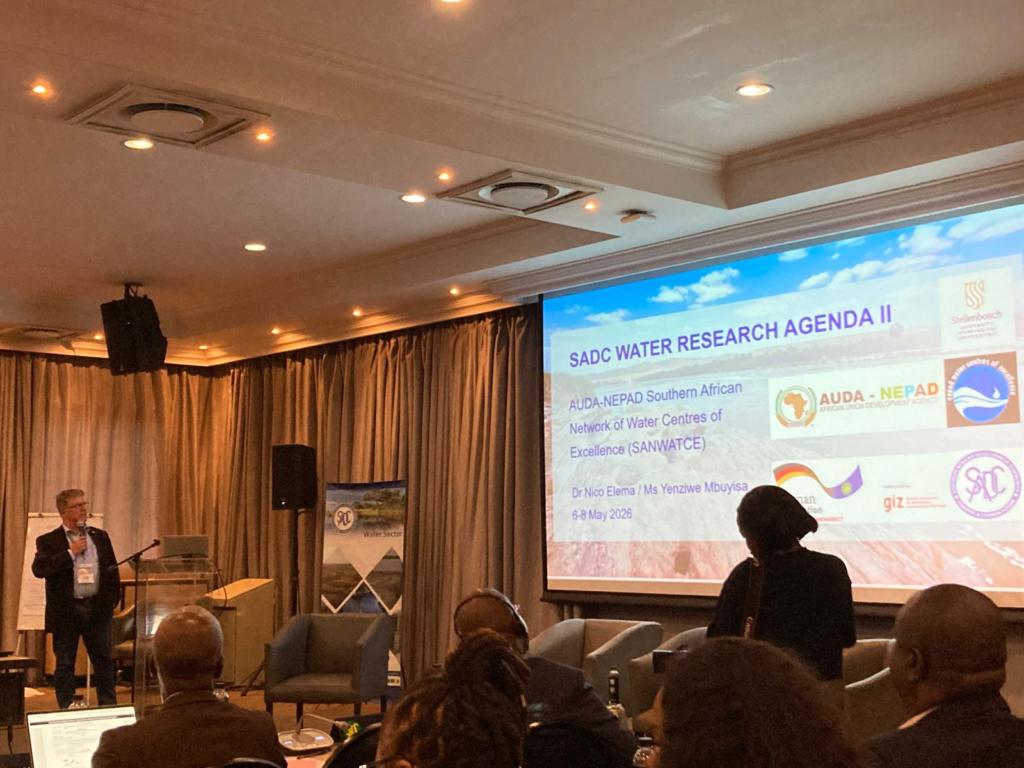
During the week of 4 to 6 May 2026, the AUDA-NEPAD SANWATCE Secrariat presented the final version of the revised SADC Water Research Agenda to the Regional Stakeholder Workshop to review and validate Regional Water Sector Strategies in Johannesburg, South Africa. This follows a year of analysis, reviews and stakeholder engagements with more than 500 stakeholders in the region. The final review document was validated and recommended for further adoption to the Water Resource Technical Committee, which is the final step before the SADC Ministers are asked to adopt the agenda.

On the sidelines, the secretariat also had a wonderful personal highlight where they connected with Ms Zanele Lulane from Eswatini, a beneficiary of the ACEWATER III project. She is undertaking a PhD through the University of KwaZulu-Natal, and would contribute towards developing a Framework for Strengthening the Institutional, Technical and Operational Capacity of the Incomati–Maputo River Basin for Effective Transboundary Water Resources Management

It was so nice to connect and for her to share her story. Wonderful to see how we are all making a difference at a personal level

Applications open!! University of the Western Cape (UWC) Short Course Training, 6 July – 24 July 2026: Groundwater & Transboundary Aquifers – NQF 7 Accredited

UWC, through the ACWATER III project, is pleased to share a professional development opportunity. This 3-week course is fully registered as an NQF (National Qualifications Framework) Level 7 module, making it ideal for those seeking formal academic credit or professional development.

Topic: Application of Water-Based Technologies To Characterize Groundwater In Transboundary Aquifer Systems

Register & Learn More
For more information, click the link below: https://pillar7uwc.ac.za/courses/application-of-water-based-technologies-to-characterize-groundwater-in-transboundary-aquifer-systems-cid73.

Please feel free to share this with your networks!